Posted on Thu, 09 Apr 2026, 07:05
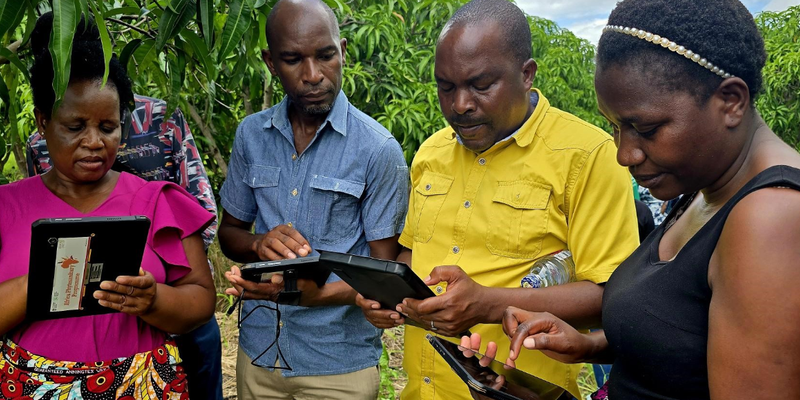
©FAO/Cynthia Plant health inspectors and plant protection officers during a practical training session at Malawi Mangoes, Salima
08/04/2026
Plant pests pose a serious threat to food security and agricultural trade in Malawi, undermining the competitiveness of the country’s crops in regional and global markets. Malawi’s pest problem is compounded by the increasing impacts of climate change, including cyclones, erratic rainfall, floods, and droughts, which contribute to the spread of destructive pests such as the Fall Armyworm and Tomato leaf miner. For years, phytosanitary surveillance systems in Malawi have relied largely on paper-based processes, limiting timely data collection, analysis, and response to pest outbreaks.
To address these challenges, the Government of Malawi, with support from the Food and Agriculture Organization of the United Nations (FAO) and the International Plant Protection Convention (IPPC), has launched the Africa Phytosanitary Programme (APP), an initiative aimed at strengthening the resilience of phytosanitary systems across the continent.
The programme, coordinated by the IPPC Secretariat, was officially launched by the Secretary for Agriculture, Irrigation and Water Development, Mrs Erica Maganga, who emphasized the importance of moving from policy to implementation in addressing pest and disease challenges. She noted that the programme marks a significant milestone towards enhancing national preparedness and improving pest management systems.
Speaking during the launch on behalf of the FAO Representative, George Mvula, Assistant FAO Representative in Malawi, reaffirmed FAO’s commitment to supporting Malawi’s agricultural resilience, saying that “FAO is ready to support the government to enhance risk management and resilience of the agricultural sector through integrated management and control of pests and diseases.”
As part of the rollout, a national training workshop was conducted in Salima, bringing together 25 plant health inspectors and plant protection officers working in border posts, aviation, crop, and research departments of the Ministry of Agriculture, and the private sector. The training was led by five national experts who had previously undergone specialized training in South Africa under the APP framework. Through the initiative, FAO and the Ministry of Agriculture, Irrigation and Water Development plan to train a total of 45 plant health inspectors and plant protection officers.
From paper-based to digital pest surveillance

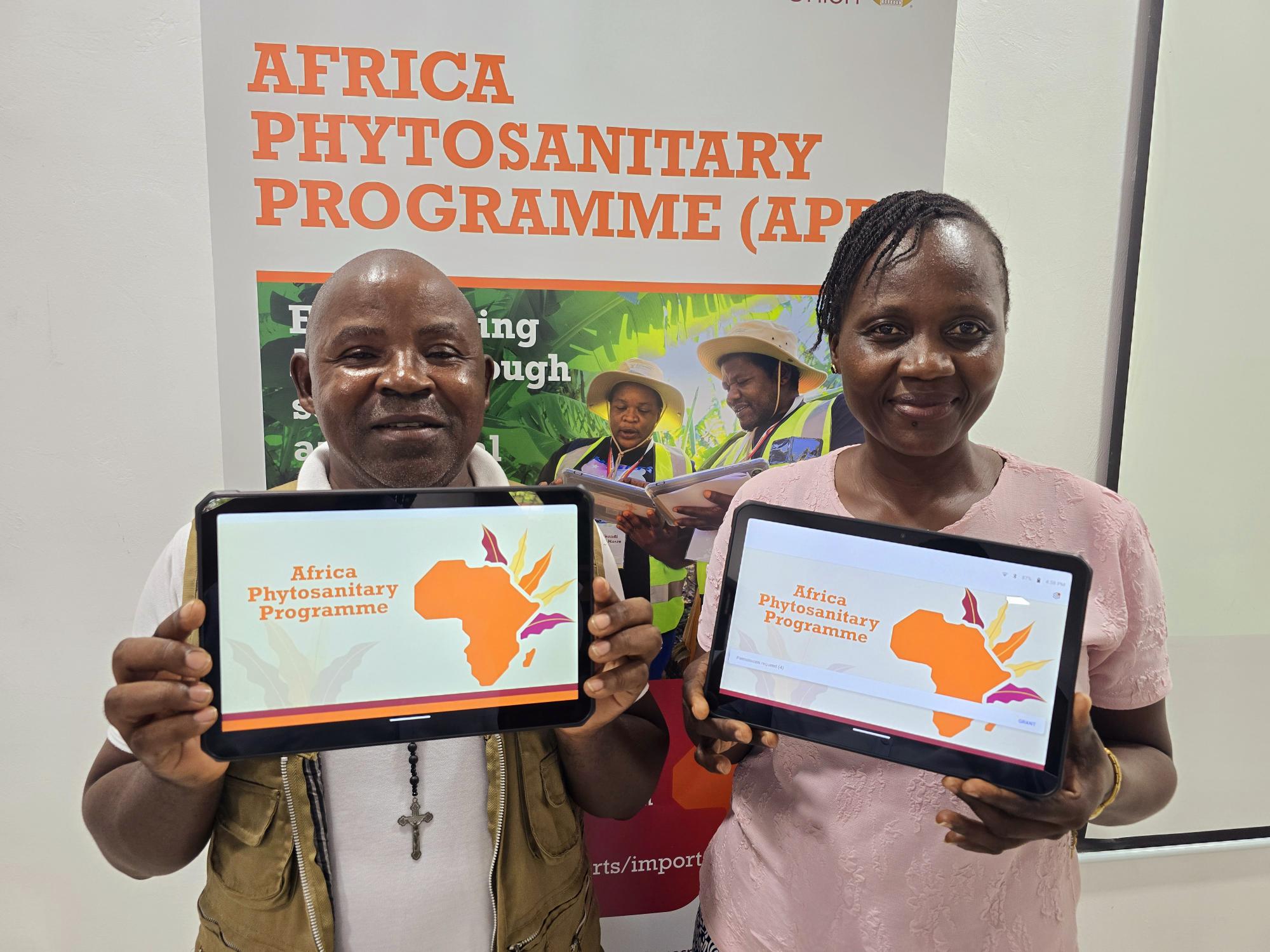
Participants showcasing tablets they received to facilitate their work. ©FAO/ Cynthia Mahata
A key milestone of the initiative is the transition from paper-based to digital pest surveillance systems. By leveraging advanced digital tools, Malawi will be able to collect, analyze, and share real-time data, enabling faster detection and response to pest outbreaks, improving compliance with international plant health standards, and expanding market access for agricultural products.
Participants were equipped with skills in digital pest surveillance, including the use of digital tools for data collection, reporting, and analysis, as well as scientific protocols for pest detection, identification, and management of priority pests. In addition, participants received tablets fitted with geospatial software and applications to ensure that they are fully equipped to do their work when they go back to their respective duty stations.
Aness Kaderu, a crop pest inspection officer from the Ministry of Agriculture, Irrigation and Water Development stationed at Mwamu Border Post in Mchinji District, found the training highly valuable in supporting the effective execution of her duties. “The training has strengthened my ability to identify and respond to pest threats more quickly and accurately,” she said. “With the tablets provided, we can now capture and share data in real time, which will greatly improve our efficiency at the border,” she said.
Malawi is among 20 African countries currently taking part in the programme, whose pilot phase started in 2023, while phase two started last year. The African Union Commission on Agriculture, through its technical unit, the Inter-African Phytosanitary Council (AU-IAPSC), supports the implementation of APP on the continent. In Malawi, the programme brings together key stakeholders, including the Department of Agricultural Research Services, the Department of Crop Development, the Department of Agricultural Extension Services, and private sector actors.
Through strengthened surveillance systems, enhanced technical capacity, and improved coordination, Malawi is positioning itself to better protect its crops, safeguard food security, and increase agricultural trade in an increasingly challenging climate.
Originally published on FAO Malawi website: https://www.fao.org/malawi/news/detail/malawi-strengthens-plant-health-systems-through-digital-innovation-under-the-africa-phytosanitary-programme/en