SPOTLIGHT: Safeguarding potato production and global trade in Egypt
Posted on Wed, 20 May 2026, 13:29
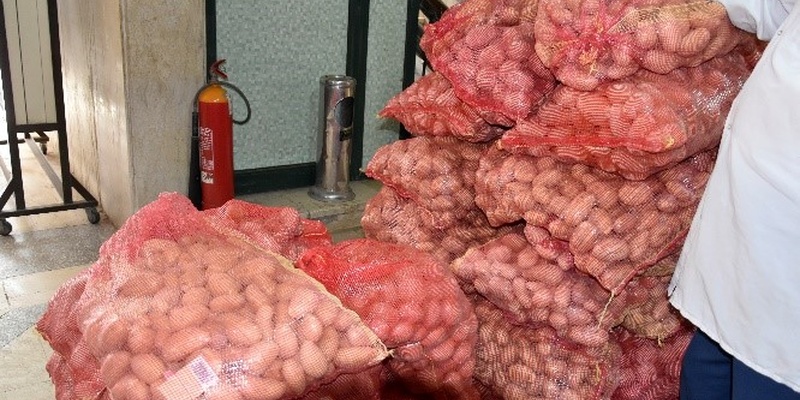
© FAO/Anita Tibasaaga
On 30 May, International Day of Potato, we celebrate the potato (Solanum tuberosum L.), a vital staple crop globally. Production and trade of this humble tuber support food security, promote sustainable livelihoods and boost national revenue. However, pests and diseases like potato blight (Phytophthora infestans) and potato brown rot devastate potato production. In the mid-19th century, Ireland’s potato shortage caused widespread food insecurity, hunger and migration, and impacted exports. History teaches that this staple crop must be protected at all costs.
Egypt is among the top five global potato exporters, with an annual potato production of about 6.7 million tonnes and exports worth USD 537million in 2025. However, potato brown rot, caused by Ralstonia solanacearum – a soil-borne bacterium transmitted through contaminated soil and infected planting material – threatens potato production, processing and trade.
Consequently, Egypt’s potato exports face strict quarantine measures, especially in Europe, where the country suffered several quarantine restrictions in the 1990s, resulting in reduced foreign revenue. In response, Egypt is implementing stringent measures that leverage advanced technology, enforce strict compliance with plant health standards, ensure sustainable cultivation and secure trade.
A stitch in time…
In 1997, with technical and financial support from its partners, Egypt started the Potato Brown Rot Project to help establish Ralstonia solanacearum-free areas. Now in its second phase, the project conducts intensive plant pathology research on the disease’s genetic diversity, biology, epidemiology, diagnosis and distribution. This work supports the identification of best approaches to manage the disease, address farmers’ challenges and establish disease-free potato-growing areas.
Furthermore, Egypt also accredited its laboratories, introduced high-throughput technologies, engaged relevant stakeholders, trained its staff and issued 12 ministerial decrees supporting the creation and sustainable funding of pest-free potato production sites.
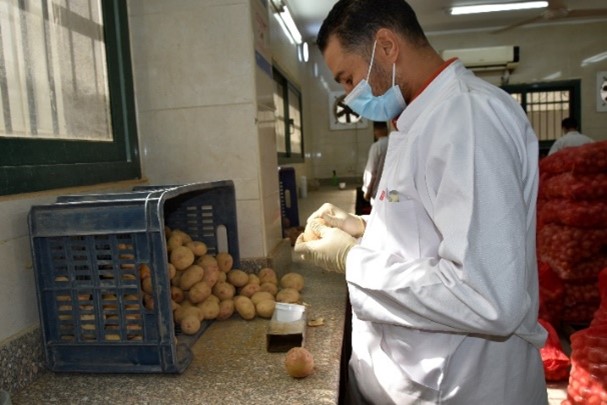
©FAO/ Anita Tibasaaga
Checking potato export samples for disease symptoms at the Potato Brown Rot Project headquarters in Cairo, Egypt
Using modern diagnostics, Geographic Information Systems (GIS) and remote sensing, Egypt monitors its potato-growing regions to generate reliable surveillance data on pest-free potato production. These tools enhance Egypt’s compliance with International Standards for Phytosanitary Measures (ISPMs) such as ISPM 4 (Pest Free Areas) and ISPM 10 Requirements for the establishment of pest free places of production and pest free production sites, which provide IPPC contracting parties with the requirements to designate and maintain pest-free zones for safe exports.
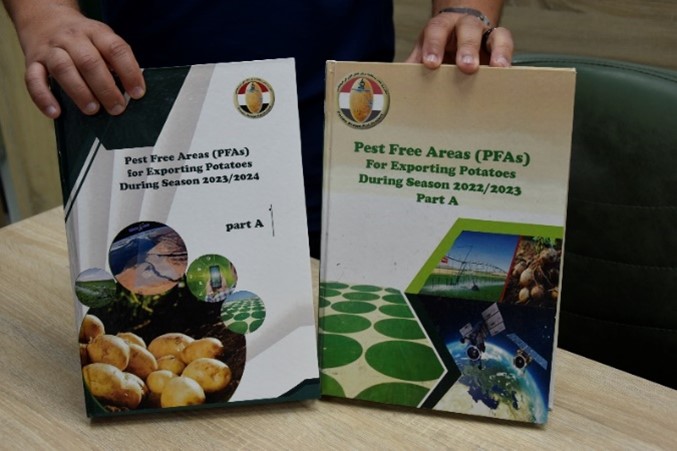
An Annual Report of Pest Free Area (PFA) of potato brown rot disease-free zones from which produce is approved for export, serves as a blueprint for potato exporters and emphasizes Egypt’s compliance with plant health standards.
 |  |
|
Annual Reports of potato brown rot disease-free areas
©FAO/ Anita Tibasaaga Annual Reports of potato brown rot disease-free areas | ©FAO/ Anita Tibasaaga An engineer demonstrates how tablets are used to monitor farms across Egypt to ensure pest-free production |
“By addressing the pest threat and protecting potato-growing regions such as newly reclaimed lands where pest-free areas were established and maintained, Egypt has experienced exponential growth in potato production, export and market access”, said Islam Aboelela, Supervisor of the phytosanitary unit of the national plant protection organization (NPPO) of Egypt, the Central Administration of Plant Quarantine (CAPQ).
“Egypt has enjoyed greater confidence from trading partners and demonstrated the benefits of complying with international phytosanitary standards, with our exports exceeding 1.4 million tonnes this year”, he added.
Egypt also strengthens its pest surveillance through the IPPC’s Africa Phytosanitary Programme (APP). APP, launched in 2023 at a workshop hosted by the Government of Egypt, empowers officers in NPPOs, with harmonised pest survey protocols and advanced digital technologies for pest monitoring.
To boost agricultural production, ensure food safety and enhance national phytosanitary capabilities, Egypt finalized a Phytosanitary Capacity Evaluation (PCE). The PCE process enables stakeholders and staff of Egypt's NPPO to collaborate to identify gaps and develop solutions to strengthen the national phytosanitary system.
“The establishment of Pest-Free Areas has significantly enhanced Agrofood’s potato production by minimizing crop losses from infestations, ensuring healthier yields and improving overall farm efficiency”, said Salah Hegazy, Chairman, AgroFood Limited, a potato growing and exporting firm. “By operating in pest free areas, we meet stringent international phytosanitary standards, especially with organic produce. This compliance has opened doors to premium markets, particularly in the European Union and the United Kingdom. Agrofood has expanded its export volume, secured better pricing and built long-term trade partnerships, reinforcing Egypt’s reputation as a reliable supplier of quality potatoes”, he added.
How the IPPC protects potatoes
Through the ISPMs and implementation guidance material, the IPPC provides a global safety net that protects potatoes, potato farmers, processing industries, traders and consumers. The IPPC Plant Health Campus offers a range of courses for NPPOs to strengthen officers’ skills and knowledge in protecting vital crops such as potatoes. Below are some of the ISPMs, guides and e-learning materials that support potato health.
- Pest risk analysis- ISPM 2, ISPM 11, Pest Risk Analysis Training Material and e-learning course: Pest Risk Analysis help countries assess and manage risks from harmful organisms that may affect potatoes.
- Pest free areas- ISPM 4 and IPPC guide: Establishing and Maintaining Pest Free Areas support countries in designating and maintaining pest-free zones to support safe exports.
- Systems approach- ISPM 14 promotes independent measures across the production chain, from farm to export, to effectively manage pest risks.
- Phytosanitary certification- ISPM 12, IPPC guide: Export certification and e-learning course: Phytosanitary Export Certification System ensure that exported potatoes meet the phytosanitary requirements of importing countries, preventing the spread of harmful pests and pathogens.
- Diagnostic Protocols (DPs), the IPPC guide: Delivering phytosanitary diagnostic services and protocol to survey and detect pests that target potatoes, including DP 8: Ditylenchus dipsaci and Ditylenchus destructor and DP 25: Xylella fastidiosa.
Related information