
Strategic partnership forum for the Africa Phytosanitary Programme (APP)
Background
Since its launch in September 2023, the Africa Phytosanitary Programme (APP), has grown from a pilot project involving 11 African countries to a truly regional intervention, with nine countries joining in Phase 2 (June 2025) and 18 expected to join Phase 3 in July 2026. APP is envisioned to cover the entire African continent, becoming a truly regional undertaking.
APP is a joint initiative of the International Plant Protection Convention (IPPC) Secretariat and the African Union Department of Agriculture, Rural Development, Blue Economy, and Sustainable Development, aimed at supporting African countries to build their phytosanitary capacity and boost regional collaboration to prevent the introduction and spread of harmful plant pests and diseases.
APP strengthens phytosanitary capacity through harmonised pest survey protocols and digital tools to enhance biosecurity, prevent the spread of high risk pests, and facilitate safe, transparent agricultural trade, contributing to food security and resilience across Africa.
What: Strategic partnership forum for the Africa Phytosanitary Programme (APP)
Held at the heart of Africa’s governance and regional coordination architecture, this high-level event will convene development partners, donors, regional institutions and national authorities to align strategic financial support and partnerships to sustain momentum and reinforce Africa’s contribution to regional and international agricultural markets.
The forum will:
- Present consolidated results and lessons learned from the implementation of APP
- Demonstrate operational functionality of the digital and training ecosystem
- Clarify priority investment needs to scale the programme throughout Africa
- Strengthen international collaboration for impactful phytosanitary outcomes
When: Monday, 6 July 2026
Where: Ethiopian Skylight Hotel, Addis Ababa, Ethiopia.
Why: Through APP, countries have demonstrated that coordinated investment in plant health can translate rapidly into operational, data-driven surveillance systems. The Forum will therefore foster predictable and coordinated investment and partnerships to consolidate gains, promote African institutional ownership, enable sustainable scaling of the programme and explore how APP lessons, tools and methodologies can inform wider phytosanitary capacity development—potentially laying the groundwork for an evolution toward a Global Phytosanitary Programme (GPP).
To consolidate and scale APP implementation across Phase 3 (18 countries) in 2026, Phase 4 in 2027 and Phase 5 in 2028, the IPPC requires an estimated USD 5.1 million, approximately USD 150 000 per participating country.
Sustained APP support will go towards:
-
Delivery of national training activities
-
Development and deployment of a dedicated APP mobile application
-
Configuration, maintenance and further development of GIS systems
-
Provision of field surveillance equipment where required
-
Coordination, technical and advocacy support
Who should attend: Representatives of donor countries, regional and international development cooperation agencies, national and African regional authorities.
Language: The workshop will be conducted in English and interpretation will be provided in French.
Collaborators and partners:
-
African Union Department of Agriculture, Rural Development, Blue Economy, and Sustainable Development
-
Food and Agriculture Organization of the United Nations (FAO) Subregional Office for Eastern Africa (SFE)
-
Food and Agriculture Organization of the United Nations (FAO) Regional Office for Africa (RAF)
-
Ethiopian Agricultural Authority (EAA)
-
African Union Inter-African Phytosanitary Council (AU-IAPSC)
-
Near East and North Africa Plant Protection Organization (NEPPO)
-
European Commission
-
Government of the United Kingdom of Great Britain and Northern Ireland
How to participate: Interested in joining the Forum and shaping collaborative action for plant health and safe agricultural trade in Africa, please register here.
APP’s impact in Africa today: In less than three years of implementation, APP has become a practical mechanism for strengthening plant health systems in Africa. The programme is supporting African countries to transition from fragmented and paper-based pest surveillance and data collection methods to harmonized, digital and evidence-based pest monitoring systems that improve decision-making, strengthen phytosanitary compliance and support safer agricultural trade. Notable achievements include:
- Improved pest detection and response to priority pests
- A stronger basis for more effective regional phytosanitary cooperation
- Better implementation of and compliance with international phytosanitary standards
- More than 600 plant health specialists trained through regional and national workshops, including two regional Train-the-Trainer workshops and 10 national trainings. These efforts have resulted in demonstrably stronger technical capacities of African NPPOs.
- 900 digital tablets procured, (500 for Phase 1 countries and 400 for Phase 2) to enhance surveillance
- 850 active users of the APP GIS Hub across 20 countries, supporting real-time access to pest survey data and more efficient resource use.
- 30+ standardized pest survey protocols developed, including nine published and 16 under development or refinement.
- More than 150 GIS maps developed and over 2 500 georeferenced surveillance locations recorded .
- Surveillance coverage extended to 50+ protected commodities, helping countries generate stronger evidence for pest status, risk-based planning and phytosanitary decision-making.
- Better national-level coordination of pest surveys and management of field data and stronger national ownership, with several countries contributing financial and in-kind resources to sustain and expand APP implementation.
- Safer trade and market access resulting from reliable phytosanitary systems and data
Provisional agenda: here
Speakers:
 |
His Excellency Moses Vilakati Commissioner, African Union Department for Agriculture, Rural Development, Blue Economy, and Sustainable EnvironmentHis Excellency Vilakati, a distinguished national of the Kingdom of Eswatini, has over three decades of leadership and expertise in agriculture, sustainable development, environmental conservation, climate resilience, and eco-tourism. At the African Union, he champions transformative policies across the continent. Previously, he served for a decade as a Cabinet Minister in Eswatini, leading both the Ministry of Agriculture and the Ministry of Tourism and Environmental Affairs. He has a Master of Science (MSc) in Agriculture (International Development) from the California Polytechnic State University. |
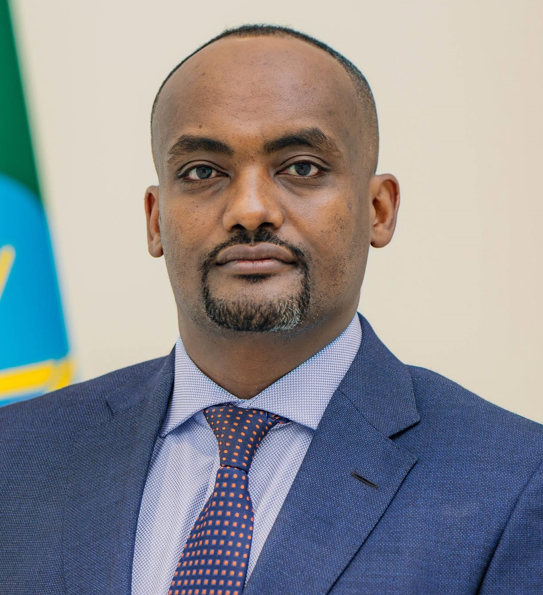 |
His Excellency Addisu Arega Kitessa Minister for Agriculture, EthiopiaH.E. Arega Kitessa is a senior politician with past leadership roles at both federal and regional levels in Ethiopia. His experience includes coordinating rural development programmes, working in the Government Communications Affairs Office, and serving as Coordinator of the Oromia Regional State Rural Cluster. |
 |
Enrico Perotti Secretary, International Plant Protection Convention (IPPC)Enrico is an internationally recognized leader in plant health, biosecurity and agricultural policy, with over 30 years of experience spanning government, academia, and the private sector. At the IPPC Secretariat, he leads efforts to protect plant resources, facilitate safe trade, strengthen international cooperation and integrate scientific innovation, digital tools and capacity development to enhance global phytosanitary frameworks. Enrico has held senior roles, including leadership of the biosecurity risk assessment team at New Zealand’s Ministry for Primary Industries and key positions within the Australian Public Service focused on biosecurity policy and emergency response. He also helped advance Australia’s trade and market access as Australia’s first Agriculture Counsellor to Malaysia and Brunei. |
 |
Steve Côté National Manager, International Phytosanitary Standards Section, Canadian Food Inspection Agency (CFIA) Steve joined the Canadian Food Inspection Agency (CFIA) in 2002 in the Plant Protection Division, working on domestic, import and export phytosanitary issues. He also has experience working on various market access issues. As national manager of the International Phytosanitary Standards Section of the Plant Export Division, he oversees CFIA’s engagement in the International Plant Protection Convention (IPPC) and the North American Plant Protection Organization (NAPPO). Steve is Canada’s representative on the NAPPO Executive Committee, previously served as a member of the NAPPO Advisory and Management Committee (AMC), and was involved in the development and revision of various NAPPO Regional Standards for Phytosanitary Measures. He is currently a member of the IPPC Standards Committee, which oversees the IPPC standard-setting process, manages the development of international standards for phytosanitary measures (ISPMs), and provides guidance and oversight to the work of technical panels and expert working groups. |
 |
Orlando Sosa Representative ad interim, Food and Agriculture Organization of the United Nations (FAO) Representation in Ethiopia Orlando is an Agriculture Crops Officer at FAO’s Sub-regional Office for East Africa based in Addis Ababa. He is a Belize national with an MSc in Plant Protection and Entomology. He has diverse experience in plant protection and plant health regulatory programmes, project design and institutional capacity building in agriculture development. He has been at the forefront of international trade in plants and plant products, having developed global tools and programmes for capacity development and implementation of the International Plant Protection Convention (IPPC)’s international phytosanitary standards. He has mobilized resources to support capacity needs of over 100 developing countries, responding to challenges through strategic and visionary innovations. |
 |
Descartes Koumba Mouendou Standard Setting Officer and Deputy Lead, Standards Setting Unit (SSU), IPPC Secretariat Descartes supports the development of international phytosanitary standards by providing technical and organizational guidance to the Standards Committee (SC) and coordinating the SC 7. He also coordinates support to key IPPC technical bodies, including the Technical Panel on Phytosanitary Treatments, the Technical Panel on the Glossary and the Expert Working Group (EWG) responsible for revising ISPM 12 – Phytosanitary Certificates (2023 020). Descartes also supports the Commission on Phytosanitary Measures (CPM) Focus Group on Sea Containers, provides technical assistance to the Africa Phytosanitary Programme (APP), and coordinates the IPPC Regional Workshop for Africa. Before joining the Standards Setting Unit, he spent six years in the Implementation and Facilitation Unit (IFU), where he coordinated the Implementation and Capacity Development Committee (IC), managed IPPC Observatory surveys and supported dispute avoidance, implementation materials and cross unit collaboration. He previously worked with the Ministry of Agriculture of Gabon and the FAO Subregional Office for Central Africa. Descartes has a Master’s in Environmental Management and an Engineer’s degree in Plant Protection and Production. He speaks English and French fluently. |
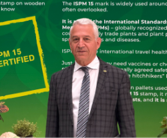 |
Avetik Nersisyan Standard Setting Unit Leader and APP Coordinator, IPPC SecretariatAn agronomist with about three decades of experience, Avetik coordinates standard-setting activities of the IPPC Standards Committee, technical panels and expert working groups. As the Unit Leader, he provides substantial input to preparations for sessions of the Commission on Phytosanitary Measures (CPM), the Strategic Planning Group, the CPM Bureau, and other ad hoc meetings. Before joining the IPPC, he managed the implementation of the Food and Agriculture Organization of the United Nations (FAO)’s Strategic Programme Two (SP2) in the FAO Regional Office for Europe and Central Asia. SP2 focuses on making agriculture, forestry, and fisheries more productive and sustainable. Previously, he was also alternative FAO Representative for Moldova, FAO Technical Officer for Plant Production and Protection in the region and Assistant FAO Representative in Armenia. |
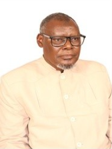 |
Halidou Mohomodou Directeur général de l'Office de la Protection des Végétaux (OPV) Halidou Mohomodou est Ingénieur Agronome titulaire d’un Master en Protection Durable des Cultures et de l’Environnement. Expert éprouvé, il possède plus de 20 ans d’expérience dans le développement rural et la protection des végétaux au Mali. Depuis octobre 2023, il occupe le poste de Directeur général de la ONPV, après avoir occupé des postes de direction progressifs, notamment celui de Directeur général adjoint, de chef de Division Surveillance, Alerte et Intervention, de chef de Bureau documentation et de la communication, de chef de la section suivi et évaluation et de coordonnateur national de la lutte contre chenille légionnaire d’automne. Il est un spécialiste de la lutte intégrée contre les ravageurs ainsi que des mesures sanitaires et phytosanitaires (SPS), possédant une vaste expérience dans la direction de projets financés à l'échelle internationale. |
 |
JanHendrik Venter Director of Plant Health and the National Plant Protection Organization (NPPO) of South Africa Jan has worked for the Department of Agriculture in South Africa for more than 27 years, specializing in pest risk analysis, exotic pest surveillance and response, and the development of related legislation and policy. A fruit fly expert, he served for 11 years on the IPPC Technical Panel of Fruit Flies and contributed to regional and international projects including the IPPC Pest Outbreak and Alert System (POARS) study and recommendations, as well as the Fruit Fly Free WTO Standards and Trade Development Facility (STDF) project. He managed the Plant Health Early Warning Systems division for 16 years, coordinating national pest control and surveillance programs. He served two years on the Bureau of the Commission on Phytosanitary Measures (CPM), representing the African region while supporting work on POARS, diagnostic networking, and pest surveillance. |
 |
Mohamed Mahmoud El Mansy Head, Central Administration of Plant Quarantine/National plant protection organization (NPPO), EgyptMohamed Mahmoud El-Mansy has a master degree and a PhD from the Faculty of Agricultural Sciences, Tanta University and has extensive expertise in plant health, crop monitoring and agricultural traceability. He is an executive committee member of the regional plant protection organisation for the Near East and North Africa and has also worked as lecturer of plant quarantine studies at Cairo University. As former head of the Exporters Service Department at the NPPO, he strengthened governance of Egypt’s export system by establishing a centralized mechanism to track the movement of agricultural products and helped advance the use of Good Agricultural Practices to ensure pest free production. His leadership in tightening controls on the safe use of agricultural pesticides contributed to the issuance of Ministerial Resolution No. 386 of 2021 by the Minister of Agriculture. |
 |
Ambassador Carla Mucavi
Senior Advisor for Partnership and Regional Cooperation, Food and Agriculture Organization of the United Nations (FAO), Regional Office for Africa In this role, Carla Mucavi provides strategic advice and support on partnership development, resource mobilization, and regional cooperation, helping to strengthen collaboration with governments, regional institutions, development partners, and other stakeholders in support of FAO’s priorities across Africa. A national of Mozambique, she brings extensive diplomatic, multilateral, and development experience. Since joining FAO in 2015, she has served as Director of the FAO Liaison Office with the United Nations in New York, United States and as FAO Representative in Kenya and Botswana. Prior to joining FAO, Mucavi was the Ambassador Extraordinary and Plenipotentiary of Mozambique to Italy, Greece and Malta, and Permanent Representative to FAO, the World Food Programme (WFP) and the International Fund for Agricultural Development (IFAD), in Rome, Italy. In 2013, she chaired the African Regional Group of the Permanent Representatives in Rome. She has also served in the Ministry of Foreign Affairs and Cooperation in Mozambique, the Embassy of Mozambique in Addis Ababa, Ethiopia and as Deputy Director of State Protocol at the Presidency of the Republic of Mozambique. She has a Master of Cooperation and Development Planning from the Sapienza University in Italy, and a Bachelor of Arts in International Relations from the Institute of Higher Studies in International Relations in Mozambique. |
 |
Leonard Shumbe Policy Officer, Directorate-General for Health and Food Safety (DG SANTE), the European Commission At DG SANTE Leonard contributes to the development, management, monitoring and evaluation of EU policies and/or legislation in plant health. He is also in charge of coordinating the EU’s plant health activities with international organizations such as IPPC the European and mediterranean plant protection organization (EPPO). Leonard holds a PhD in Plant Biology, with over eight years of experience as a Plant genetics researcher, before joining the European Commission. |
 |
Michelle Gray Director, International Phytosanitary Standards, Plant Protection and Quarantine (PPQ), Animal and Plant Health Inspection Service (USDA), U.S. Department of AgricultureMichelle leads strategic planning and international collaboration to develop and implement harmonized phytosanitary standards that protect plant health from invasive pests and diseases and facilitate safe, efficient global trade. She joined PPQ in 2019 as an Assistant Director in the Science and Technology, Plant Pest Risk Analysis Unit supporting plant pest prioritization, detection, and response activities. She also served as Chief of Staff in PPQ Emergency and Domestic Programmes. In 2025, Michelle became the North America representative on the International Plant Protection Convention (IPPC’s) Commission on Phytosanitary Measures (CPM) Bureau and member of the CPM Focus Group on Sea Containers. She is also a member of the CPM Focus Group on Plant Health in the Context of One Health. |
 |
Saliou Niassy Coordinator, African Union Inter-African Phytosanitary Council (AU-IAPSC)Saliou is a plant health scientist and entomologist with extensive experience in agricultural research, pest management, and phytosanitary systems in Africa. At AU IAPSC, he leads efforts to strengthen plant health regulations, phytosanitary capacity, and safe trade across the continent. His work focuses on integrated pest and plant health management, sustainable agriculture, and biodiversity conservation. Before joining the African Union, he held leadership roles in research and technology transfer at the International Centre of Insect Physiology and Ecology (icipe) and has contributed to over 200 scientific publications on topics including integrated pest management, climate change impacts on agriculture, and sustainable crop protection. His expertise bridges scientific research and policy implementation to enhance food security, reduce reliance on harmful pesticides, and promote eco-friendly agricultural practices across Africa. |
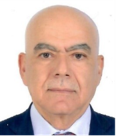 |
Mohamed Habib Ben Jamâa Executive Director of the Near East and North Africa Plant Protection Organization (NEPPO).Ben Jamâa has more than 30 years of experience in plant protection and has been heading the NEPPO since 2023. Before that, he led the national plant protection organization (NPPO) of Tunisia (DGSVCIA) for six years. He is a full Professor and researcher in plant protection (Entomology) at the National Institute for Research in Rural Engineering, Water and Forests (INRGREF). |