
Cómo el Comité de Aplicación y Desarrollo de la Capacidad de la CIPF está ayudando a definir el futuro de la innovación en sanidad vegetal
Posted on dom, 31 May 2026, 08:55
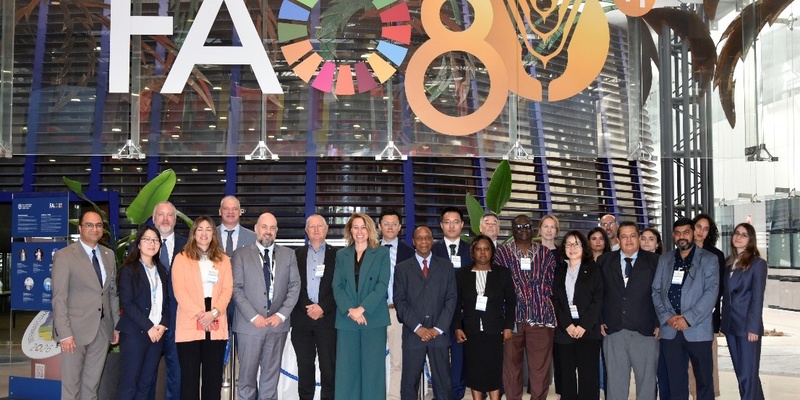
©FAO/ Olivetta Caravita di Toritto. Miembros del Comité de Aplicación y Desarrollo de la Capacidad y personal de la Unidad de Aplicación y Facilitación de la Secretaría de la CIPF.
Roma, 28 de mayo de 2026. La innovación en sanidad vegetal suele asociarse a la inteligencia artificial, los sistemas digitales de certificación o las tecnologías avanzadas de vigilancia. Sin embargo, los debates celebrados en la reunión de mayo de 2026 del Comité de Aplicación y Desarrollo de la Capacidad (CADC) de la Convención Internacional de Protección Fitosanitaria pusieron de relieve una visión más amplia: la innovación no se limita a las nuevas tecnologías, sino que también abarca la forma en que los países cooperan, fortalecen sus capacidades y traducen las normas internacionales en acciones concretas.
Durante la reunión, celebrada del 18 al 22 de mayo de 2026 en la sede de la Organización de las Naciones Unidas para la Alimentación y la Agricultura (FAO) en Roma, los miembros entrantes y salientes del CADC, expertos técnicos, representantes de organizaciones regionales y socios para el desarrollo debatieron los desafíos cada vez más complejos que dificultan la capacidad de los sistemas nacionales de protección fitosanitaria para aplicar eficazmente las normas internacionales de sanidad vegetal, así como las formas en que estrategias innovadoras, una sólida colaboración y nuevas tecnologías pueden ofrecer soluciones concretas.
El apoyo a los países para la aplicación de las normas fitosanitarias se coordina a través de la Unidad de Aplicación y Facilitación (IFU) de la Secretaría de la Convención Internacional de Protección Fitosanitaria. Esta unidad también respalda la ejecución de cinco de los ocho temas de la Agenda de Desarrollo del Marco Estratégico de la CIPF 2020–2030. Durante la reunión, la IFU presentó actualizaciones sobre sus actividades en estas áreas prioritarias, incluyendo el apoyo a los Sistema de alerta y respuesta ante brotes de plagas (SARBP), la solución ePhyto de la CIPF, el Campus de Sanidad Vegetal de la CIPF, acciones relacionadas con el cambio climático, proyectos de desarrollo de capacidades fitosanitarias e iniciativas de apoyo a la aplicación.
Al destacar la necesidad de considerar la innovación más allá de un enfoque exclusivamente tecnológico, los participantes subrayaron la importancia de que los países desarrollen soluciones escalables, accesibles y adaptables para hacer frente a las brechas de recursos, las limitaciones de personal y el acceso desigual a herramientas digitales.
La reunión también incluyó una sesión virtual sobre “Innovación en el desarrollo de capacidades fitosanitarias”, en la que diversas organizaciones —entre ellas el Fondo para la Aplicación de Normas y el Fomento del Comercio (FANFC), el Comité de enlace entre espíritu empresarial, agricultura y desarrollo (COLEAD), el Banco Mundial, el Organismo Internacional de Energía Atómica (OIEA), el Centre for Agriculture and Biosciences International (CAB International), TradeMark Africa y otras— compartieron experiencias sobre digitalización, vigilancia, formación y facilitación del comercio.
El CADC como motor de sistemas fitosanitarios más sólidos
Los debates pusieron de relieve la creciente influencia del Comité de Aplicación y Desarrollo de la Capacidad (CADC) en la promoción de la aplicación de normas y el desarrollo de capacidades, actuando en la intersección entre la formulación de políticas, el asesoramiento técnico, la formación y el apoyo operativo. El papel estratégico cada vez más amplio del Comité está ayudando a los países a abordar cuestiones complejas como el cambio climático, las nuevas plagas, las vías de introducción asociadas al comercio electrónico, la certificación electrónica y los enfoques sistémicos para el comercio.
Los participantes señalaron que los retos de aplicación no se deben tanto a la falta de orientación técnica, sino a las dificultades para traducirla en acciones efectivas sobre el terreno. Para hacer frente a esta brecha, el CADC refuerza los vínculos entre la elaboración de normas, las directrices de aplicación, las herramientas de aprendizaje en línea y las experiencias prácticas de campo.
Un ejemplo de ello es la expansión continua del Campus de Sanidad Vegetal de la Convención Internacional de Protección Fitosanitaria, cuyo lanzamiento en español está previsto en las próximas semanas. Este Campus sigue despertando un gran interés, especialmente en cursos sobre preparación ante emergencias, respuesta a plagas y ejercicios de simulación, y es cada vez más utilizado por universidades y autoridades nacionales para apoyar la formación profesional.
Finalmente, la reunión subrayó el valor del CADC no solo como órgano técnico, sino también como plataforma para conectar normas, aplicación, asociaciones y desarrollo de capacidades en un sistema fitosanitario global más coherente.