SPOTLIGHT: Two epidemics, unequal response: Facing human diseases and crop pest and disease outbreaks
Posted on Fri, 12 Jun 2026, 07:49
© FAO /Alaa Badarneh
Why plant health matters as we commemorate the International Day of Plant Health
On a busy morning in a large city, news spreads quickly. A new human infectious disease has been detected in a distant country, putting the country on high alert. Within hours, headlines appear on television, social media fills up with updates and governments begin preparing emergency responses. Experience has taught us how quickly human disease can escalate to epidemic levels, requiring urgent action.
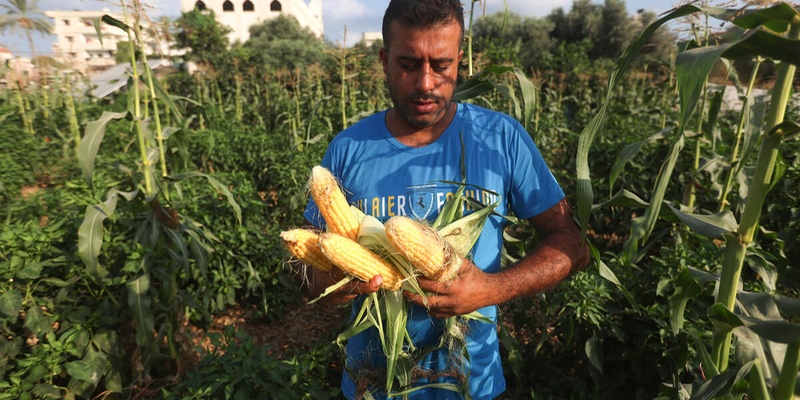
Far from the cities and headlines, in rural farming regions, another kind of crisis unfolds more quietly. A farmer walks through a field expecting a healthy harvest, only to find leaves curling, stems weakening, and crops failing. The cause is not yet visible to the wider world, but a pest or plant disease is spreading across farms, crossing borders through wind, trade, soil or seed systems. Unlike the fast-moving human epidemic dominating global news, this agricultural outbreak grows in silence, unnoticed beyond the farming community.
Divergence in expanding epidemics
While both types of epidemics can have devastating consequences, they differ significantly in terms of awareness and impact pathways, response systems and financing.
Awareness and public attention to the outbreaks
As days turn into weeks, the difference in attention becomes even clearer. The human health crisis continues to receive global updates, scientific briefings and coordinated international action. In contrast, the crop pest outbreak is reported locally, sometimes inconsistently, with limited visibility outside agricultural agencies. Yet both events share a common reality - they are system-wide threats that spread across borders.
Recent crop epidemics include devastating desert locust outbreaks in East Africa, India and Pakistan; Wheat Rust across Africa, the Americas, Asia, Australia and Europe and; Cassava Mosaic and Cassava Brown Streak Disease in sub-Saharan Africa; Xylella fastidiosa in ancient olive trees in south Europe; and Fusarium wilt Tropical Race 4 (TR4) in Latin America - the banana equivalent of COVID-19 in human health.
Dynamics of spread and occurrence

© Madelene Cronjé
Plant pests and disease epidemics often spread more slowly, sometimes over months or years, shaped by seasons, weather and agricultural practices. However, once established, they can persist across seasons and production cycles, making them difficult to eliminate. Once crops are infested, there is often no treatment that can restore them. In most cases, crops are cleared or uprooted, like in the case of Fusarium oxysporum f.sp. cubense tropical race 4 (Foc TR4); fields are replanted, forcing farmers to wait for the next production cycle. Losses are immediate and often irreversible for that season.
FAO supports countries to detect, prevent and manage crop pests and diseases. It works with national plant protection organizations to strengthen plant pest surveillance, improve early warning systems, and coordinate cross-border responses to outbreaks. Through international policy, technical guidance and field support, FAO helps countries identify outbreaks early and apply integrated pest management strategies that reduce damage and protect ecosystems.
Through the International Plant Protection Convention (IPPC), countries collaborate in developing and adopting harmonized phytosanitary standards that help prevent and manage pest outbreaks. This science-based rules system ensures common understanding in actions to prevent and address pest risks, eliminating any unjustified international trade restrictions. These standards provide benchmarks for core phytosanitary actions to prevent plant pest spread, for instance in surveillance, pest reporting obligations and identification.
Impact on human health and livelihoods
Human disease epidemics have a direct impact on human health, causing illness and sometimes death.
However, crop pest and disease epidemics generally affect people indirectly, through reduced food availability, higher food prices and economic stress. Nevertheless, some plant or foodborne hazards, for example Salmonella and mycotoxin-producing fungi, can directly affect human health through contaminated food. Similar indirect – and sometimes direct links also exist for animal health.
Response, control measures and recovery pathways
As both crises unfold, in public health, system responses include vaccination, treatment, non-pharmaceutical interventions, and behavioural changes. These tools can reduce transmission and in some cases, eliminate diseases or significantly reduce their prevalence. In agriculture, pest and disease control relies on integrated approaches such as resistant crop varieties, chemical and biological control, quarantine measures, and agronomic practices. Unlike human diseases, there is no direct “cure” once crops are destroyed. Recovery depends on restoring production through replanting and initiating a new agricultural cycle, which introduces time delays and economic losses.
FAO helps countries strengthen their pest control efforts by supporting surveillance and integrated pest management practices, such as the use of biological control methods, good agronomic practices and sound and timely use of pesticides where it is the only option to control pests. Recovery processes are supported by promoting use of pest-resistant or tolerant varieties, assisting with seed distribution, restoring agricultural inputs and promoting resilient farming systems that can better withstand future outbreaks.
Next steps and priorities
Institutional networks and coordination
Human health governance is generally supported by strong institutional frameworks at national and international levels through coordination, surveillance and emergency response mechanisms.
Crop health systems are comparatively less coordinated at the global level. While FAO plays a key role in supporting plant health, national plant protection services and regional networks often operate with varying levels of capacity, leading to uneven surveillance and response.
Through years of experience, FAO has been facilitating information sharing among countries, supporting joint monitoring systems, and development of regional response strategies. This role is particularly important in large-scale outbreaks caused by migratory pests or fast-spreading crop pests and diseases, where delays in response can significantly increase food insecurity risks.
When IPPC contracting parties convene under the Commission of Phytosanitary Measures (CPM), they exemplify the strength of international cooperation in maintaining international standards to prevent and manage pest spread across their borders. These meetings also reinforce countries’ national reporting obligations under the IPPC, through which contracting parties are required to transparently share timely and accurate information —such as pest occurrences, phytosanitary regulations, and emergency actions—via official reporting systems.
Information systems and early warning
Information flow is another area where FAO plays a bridge role. FAO supports countries to improve data collection, pest monitoring and digital reporting so that early warnings can be shared faster and more effectively across regions. These systems aim to reduce delays in detection and improve the speed and accuracy of outbreak responses, especially in regions with limited technical capacity.
In both human and agricultural epidemics, the underlying challenge is the same: how to detect threats early, respond quickly and reduce long-term damage. The difference lies in how systems are organized and how much attention each type of crisis receives.
Innovations such as the Pest Outbreak Alert and Response System (POARS), the Phytosanitary Capacity Evaluation (PCE) and the Africa Phytosanitary Programme (APP), equip countries with stronger tools for early warning, pest reporting and routine surveillance. Together, they help identify emerging pests, assess system gaps and strengthen national capacities through improved diagnostics, digital data collection and coordinated response.
Financing and investment priorities
The story of these two epidemics is ultimately a story about perception and priority. One is seen as an urgent global emergency; the other is often treated as a technical agricultural problem. Funding imbalance becomes even more visible: human pandemics unlock significant national budgets and international financing mechanisms designed for emergency response. Crop pest pandemics – despite their deep impact on food security and rural livelihoods – often struggle to attract comparable investment, even though up to 40 percent of global crop production is lost annually to plant pests and diseases, costing the global economy over USD 220 billion.
The consequences are felt most strongly by farmers who lose harvests and by consumers who face rising food prices.
FAO works to improve the visibility of agricultural pest and disease crises so they can receive more timely investment. Through global initiatives and partnerships, FAO advocates for stronger plant health systems and increased funding for resilience building rather than only emergency response. Every dollar invested can generate up to seven in avoided losses and benefits for rural communities and vulnerable households.
One Health: Strengthening human, animal and crop systems
The comparison between responses to human and crop pest and disease epidemics reveals a clear imbalance in attention and resource allocation, but they are deeply interconnected. The One Health approach recognizes that interventions in one domain can significantly impact others. It thus promotes coordinated prevention and response across sectors so that actions taken in one area do not cause harm in another.
On the occasion of the International Day of Plant Health on 12 May, under the theme “Plant biosecurity for food security and nutrition”, FAO continues to highlight the importance of strengthening plant health systems alongside animal and human health systems. Building resilient societies requires not only controlling diseases in people and animals but also protecting the crops and ecosystems that sustain life.
Related links