Leaders convene to drive the expansion of the Africa Phytosanitary Programme to protect plant health in the region
Posted on Mon, 06 Jul 2026, 12:41
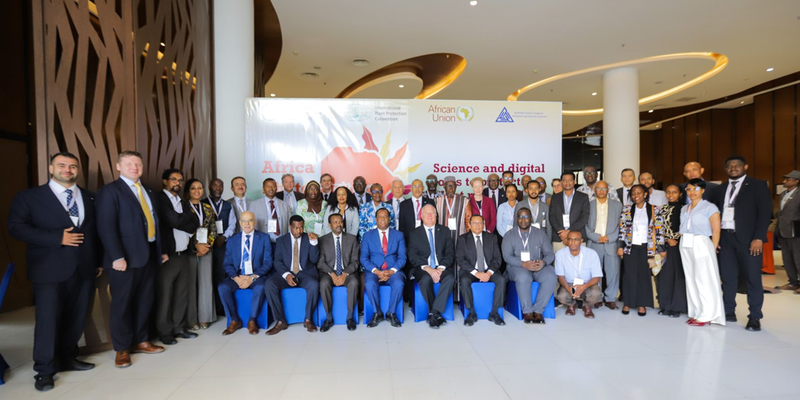
© FAO/Michael Tewelde
Addis Ababa, Ethiopia, 6 July 2026. The International Plant Protection Convention (IPPC) Secretariat, in collaboration with the Food and Agriculture Organization of the United Nations (FAO), the African Union, the Ministry of Agriculture of Ethiopia and key regional and international partners, convenes today the Strategic Partnership Forum under the Africa Phytosanitary Programme (APP) in Addis Ababa. Building on proven results and innovative digital tools that have been boosting plant health capacity, the forum will rally support for strategic partnerships and investments needed to expand the benefits across Africa and beyond.
The high-level meeting brings together ministers, development partners, donors, regional organizations and national plant protection authorities to strengthen collaboration and mobilize support for scaling plant health capacity to more countries in the region. Launched in 2023, the APP supports countries to better monitor, detect and manage plant pest threats by providing equipment, procedures, and protocols and training plant health officers to use advanced digital tools in pest surveillance. APP also provides technical assistance and standardized pest survey protocols that allow countries to use reliable and comparable data across borders. Stronger plant protection systems safeguard the region’s food security and promote safe international trade within and beyond the continent.
From 11 pilot countries, the programme has since evolved into a continent-wide effort, with nine additional countries joining the programme in 2025, while 18 more countries are expected to join this year. APP is a joint initiative of the Food and Agriculture Organization of the United Nations (FAO) through the IPPC Secretariat, and the African Union Department of Agriculture, Rural Development, Blue Economy and Sustainable Environment (DARBE).
This Strategic Partnership Forum is therefore expected to spark a conversation and action to build trust, collaboration and accelerate a model for sustainable enhancement of Africa’s and the world’s resilience to plant pests—thereby facilitating both intra-African and international trade.
"Across the continent, our governments are working to transform agriculture, achieve food and nutrition security, ensure food health, enhance agricultural productivity, create employment opportunities, and expand agricultural trade under the African Continental Free Trade Area (AfCFTA) and beyond. These aspirations, however, continue to face significant threats and risks from transboundary plant pests, invasive alien species, emerging plant diseases, and the increasing impacts of climate change, leaving negative consequences on agricultural production, biodiversity, rural livelihoods, and economic development", said Dr Fikru Regassa, Agriculture State Minister for Livestock and Fishery Resources Development Sector, Ethiopia.
"Effective phytosanitary systems are fundamental to safeguarding agricultural investments, ensuring food security, protecting natural ecosystems, facilitating safe and competitive trade, and strengthening the resilience of our food systems. Thus, investing in plant health is, ultimately, investing in Africa's economic successes and the well-being of its people. In this regard, the Africa Phytosanitary Programme represents a landmark continental initiative," he added.
"The African Union Commission has recognized the strategic importance of the Africa Phytosanitary Programme from its inception. These achievements demonstrate that when we invest in plant health, we strengthen food security, protect livelihoods, and create new opportunities for agricultural trade.
However, this is only the beginning. The Africa Phytosanitary Programme must establish an even stronger footprint across the African continent. Our ambition should be to ensure that every African Member State has access to modern phytosanitary surveillance systems, skilled personnel, and the digital technologies needed to detect and respond rapidly to emerging pest threats", His Excellency Moses Vilakati, African Union Commissioner for Agriculture, Rural Development, Blue Economy and Sustainable Environment (ARBE). His remarks were delivered by Saliou Niassy, Coordinator of the African Union Inter-African Phytosanitary Council.
He also noted that while the growing demand from countries wishing to join APP "clearly demonstrates that Africa is ready to scale up this successful model, achieving this vision will require strong partnerships, sustained investment, and above all, ownership by our Member States. This collective ownership will enable Africa to build resilient plant health systems capable of protecting our farmers, our biodiversity, and our agricultural markets for generations to come."
Since its inception, more than 600 plant health specialists have been trained under the APP, 900 digital tablets have been deployed to support field surveillance, 850 active users now access the APP geographic information system (GIS) Hub across 20 countries, and more than 150 GIS maps and 2,500 georeferenced surveillance locations have been developed to support evidence-based pest monitoring and decision-making. The programme has demonstrated that strategic investment in plant health delivers tangible results. The IPPC estimates that approximately USD 5.1 million is required to support implementation across upcoming phases in the region. This includes training activities, digital tool development, GIS systems, surveillance equipment and technical coordination.
“Today’s gathering is a milestone – having important partners and national leaders in the room signals a strong commitment to further enhance phytosanitary systems in the region. We’ve seen how innovation and the know-how have cascaded from a few countries to more than half of the continent in three short years. Scaling up to reach all African countries and other nations is not only essential, but also critical for the entire region’s food security and access to global markets”, said Enrico Perotti, IPPC Secretary.
"Safe trade depends on trust. Trust depends on credible systems. Credible systems depend on data that can be collected, verified, analyzed, and used. Therefore, pest surveillance is not a side activity. It is part of the foundation for pest risk analysis, certification, market access, and compliance with international phytosanitary standards", said Orlando Sosa, Acting FAO Representative in Ethiopia (a.i) who represented Abebe Haile-Gabriel, FAO Assistant Director-General and Regional Representative for Africa.
He added that APP is "fully aligned with FAO's work and commitment to support countries in transforming agrifood systems so they become more efficient, more inclusive, more resilient, and more sustainable. The next phase of APP should focus on consolidating existing gains by embedding the programme within national phytosanitary systems, strengthening regional coordination, maintaining digital platforms, expanding national training programmes, and progressively transferring technical coordination to African institutions".
About FAO
The Food and Agriculture Organization (FAO) is a specialized agency of the United Nations that leads international efforts to defeat hunger. FAO’s objective is to achieve food security for all and make sure that people have regular access to enough high-quality food to lead active, healthy lives. FAO works to transform agri-food systems by promoting sustainable production and consumption, including protecting the world’s plants to achieve global food security. FAO works in over 130 countries worldwide and has 195 members - 194 countries - and the European Union.
About IPPC
The IPPC is an international treaty ratified by 184 countries, aiming to protect the world's plant resources from the spread and introduction of pests, and promoting safe trade. International Standards for Phytosanitary Measures (ISPMs), developed under the auspices of the IPPC, assist countries in implementing national phytosanitary standards and import requirements. The IPPC, deposited at FAO, is the sole global standard-setting entity for plant health.
About the Africa Phytosanitary Programme (APP)
The Africa Phytosanitary Programme is a joint initiative of the IPPC Secretariat and the ARBE aimed at strengthening phytosanitary capacity across Africa. Through harmonized pest survey protocols, digital technologies, training and regional collaboration, APP supports countries in preventing the spread of plant pests, improving compliance with international phytosanitary standards and facilitating safe agricultural trade.
Resources:
Media contacts:
Anita Tibasaaga
Communications Specialist
IPPC Secretariat
Food and Agriculture Organization of the United Nations (FAO)
[email protected]
Meseret Abiy
Communication Officer
FAO Ethiopia
Phone: +251 911 161702
Email: [email protected]
Yimer Dawud
Director General of Public Relations and Communication
Ministry of Agriculture, Ethiopia
Phone: +251 911 538023
Email: [email protected]