COMMUNIQUÉ DE PRESSE: ouverture de l’Atelier mondial de la CIPV sur les approches systémiques
Posted on lun, 01 Déc 2025, 11:36
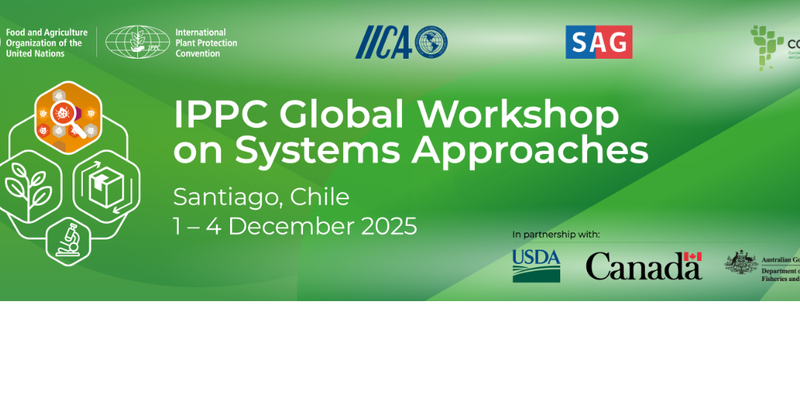
Santiago (Chili), 1er-5 décembre 2025 – Le Secrétariat de la CIPV, en collaboration avec l’Institut interaméricain de coopération pour l’agriculture (IICA), le Service de l’agriculture et de l’élevage du Chili (SAG-Chile) et le Comité de santé végétale du Cône Sud (COSAVE), organise l’Atelier mondial de la CIPV sur les approches systémiques sur le thème *Améliorer la compréhension et la mise en œuvre des mesures intégrées pour la gestion du risque phytosanitaire. Les approches systémiques sont des stratégies qui combinent plusieurs étapes afin d’assurer une protection solide contre les organismes nuisibles lorsque des végétaux ou des produits végétaux sont déplacés d’un pays à l’autre.
Cet événement majeur réunira plus de 100 participants issus des organisations nationales et régionales de la protection des végétaux (ONPV et ORPV), des pouvoirs publics et du secteur privé, afin de renforcer les capacités mondiales pour favoriser l’innocuité et l’efficacité du commerce de végétaux et produits végétaux. L’atelier portera sur les normes phytosanitaires internationales, en particulier sur la NIMP n° 14. Cette norme explique comment mettre en œuvre ensemble plusieurs mesures pour réduire les risques liés aux organismes nuisibles. Les participants apprendront à utiliser des outils et des stratégies pratiques pour concevoir, vérifier et appliquer ces approches fondées sur une combinaison de mesures.
Objectifs clés:
- Approfondir les connaissances techniques relatives aux mesures de gestion intégrée des organismes nuisibles.
- Présenter des études de cas concrètes et des enseignements tirés de différentes régions.
- Réaliser des exercices pratiques en utilisant les outils d’évaluation de la CIPV relatifs aux approches systémiques.
- Promouvoir la collaboration et le dialogue pour surmonter les difficultés de mise en œuvre.
Parmi les intervenants à l’ouverture figuraient Ignacia Fernandez Gatica, Ministre de l’agriculture du Chili, ainsi que des responsables de la CIPV, de l’IICA, du SAG, du COSAVE et du Bureau régional de la FAO pour l’Amérique latine et les Caraïbes.
Déclaration de la CIPV, Enrico Perotti, Secrétaire de la CIPV:
«Cet atelier constitue une étape cruciale vers l’harmonisation des mesures phytosanitaires à l’échelle mondiale. La CIPV joue un rôle moteur pour permettre aux pays d’avoir une compréhension commune de la norme internationale pour les mesures phytosanitaires (NIMP) n° 14, qui fournit des orientations sur l’utilisation de mesures intégrées dans une approche systémique pour la gestion du risque phytosanitaire. L’objectif est de préserver la sécurité alimentaire et de protéger l’environnement en permettant aux pays de mettre en œuvre la NIMP n° 14 et les normes connexes, et d’acquérir une expérience pratique grâce à l’utilisation des outils d’évaluation associés. En faisant progresser les approches systémiques, nous donnons aux pays les moyens de préserver la santé des végétaux tout en facilitant un commerce sûr, durable et moins restrictif.»
Déclaration de l’IICA, José Urdaz, Chef du Programme hémisphérique pour la santé agricole, l’innocuité et la qualité des denrées agroalimentaires:
«La recherche de l’excellence en matière de coopération technique constitue l’un des principaux objectifs institutionnels de l’IICA, en particulier dans le cadre de son programme SAIA. Lorsqu’elles sont correctement conçues, fondées sur une base scientifique solide et efficacement gérées, les approches systémiques constituent une mesure techniquement robuste qui offre des alternatives crédibles et pratiques pour faciliter le commerce international. Ces approches représentent un atout considérable pour les pays des Amériques, car elles soutiennent les exportateurs qui ont besoin de mesures adaptées à leurs conditions et capacités spécifiques, ainsi que les importateurs qui doivent préserver et protéger leur statut phytosanitaire.»
«Conformément aux priorités et aux besoins exprimés par les États Membres, l’IICA fournit une expertise technique et opérationnelle spécialisée visant à renforcer les capacités nationales et à favoriser la coopération. Par ces actions, l’Institut vise à améliorer la compréhension des approches systémiques et à en promouvoir la mise en œuvre efficace.»
Déclaration du SAG, Oscar Camacho Inostroza, Directeur national:
«Le Chili est reconnu dans le monde entier comme un grand producteur de fruits frais. Plusieurs facteurs y contribuent: 1) la localisation du Chili dans l’hémisphère Sud, qui permet la production de fruits frais en contre-saison par rapport aux pays de l’hémisphère Nord, où se trouvent d’importants marchés de destination pour les fruits chiliens; 2) l’existence de conditions pédologiques et climatiques qui permettent la production de diverses espèces fruitières; et 3) la stratégie de libéralisation commerciale du pays, qui vise à obtenir les approbations phytosanitaires nécessaires pour permettre aux producteurs chiliens d’accéder à différents marchés de destination.»
«Dans certains cas, l’exigence phytosanitaire imposée par le pays importateur repose sur un traitement de fumigation au bromure de méthyle, un fumigant très efficace mais qui est néfaste pour la santé humaine et l’environnement. De plus, ce type de traitement altère la qualité post-récolte des fruits frais, ce qui a des répercussions négatives sur leur commercialisation. Cela signifie qu’il est dans l’intérêt du secteur des producteurs-exportateurs de mettre en œuvre une autre solution d’exportation permettant d’éviter ces problèmes. La mise en place d’une solution alternative pour l’exportation de fruits frais fondée sur une approche systémique constitue donc une option pertinente pour le secteur des producteurs-exportateurs.»
«La mise en œuvre de ces alternatives s’inscrit dans une approche globale de gestion du risque phytosanitaire, qui associe plusieurs mesures tout au long de la chaîne de production. Ces mesures remplacent les traitements de fumigation (comme le bromure de méthyle) tout en maintenant les garanties phytosanitaires exigées par le pays de destination. Cela permet d’exporter vers le pays de destination des fruits de qualité supérieure qui présentent une durée de conservation post-récolte plus longue et qui sont exempts de produits chimiques, répondant ainsi aux attentes de consommateurs qui privilégient des produits plus sains et plus durables.»
Déclaration du COSAVE, Agustín Giudice, Président:
«Les approches systémiques qui intègrent des mesures destinées à gérer les risques phytosanitaires constituent un outil essentiel pour renforcer la modernisation et l’efficacité des processus phytosanitaires, et représentent à la fois une opportunité et une nécessité pour la région», a déclaré Agustín Giudice, Président du COSAVE. «Elles permettent de mieux protéger nos pays contre l’introduction et la dissémination d’organismes nuisibles et consolident nos systèmes phytosanitaires sur les marchés internationaux, favorisant ainsi l’innocuité et la durabilité du commerce.»
Le Comité de santé végétale du Cône Sud (COSAVE) est une organisation régionale de la protection des végétaux solidement établie, qui vise à renforcer l’intégration phytosanitaire régionale et à mettre en œuvre des actions intégrées pour faire face aux problèmes phytosanitaires communs à ses pays membres. Il a pour mission de coordonner et de renforcer les capacités régionales pour prévenir et gérer les risques phytosanitaires qui affectent la production de produits végétaux et leur accès aux marchés de la région. Cet atelier constitue une initiative stratégique conforme aux principaux objectifs du COSAVE.»
Pour de plus amples informations, voir le programme provisoire ainsi que la page web consacrée à l’événement.
Contacts presse:
Mutya Frio
Secrétariat de la CIPV
[email protected]
Alvaro Sepulveda
SAG Chile
[email protected]
Alejandro Saavedra
IICA
[email protected]
Beatriz Melcho
COSAVE
[email protected]
À propos de la FAO
L’Organisation pour l’alimentation et l’agriculture (FAO) est l’agence spécialisée des Nations Unies qui mène les efforts internationaux vers l’élimination de la faim. Son objectif est d’atteindre la sécurité alimentaire pour tous et d’assurer un accès régulier et suffisant à une nourriture de qualité permettant à tous de mener une vie saine et active. La FAO s’emploie à transformer les systèmes agroalimentaires en promouvant une production et une consommation durables, notamment en protégeant les végétaux afin d’assurer la sécurité alimentaire mondiale. Avec 195 membres – 194 pays et l’Union européenne – la FAO est présente dans plus de 130 pays à travers le monde. Pour de plus amples renseignements, voir cette page: Accueil | Organisation des Nations Unies pour l’alimentation et l’agriculture
À propos de la CIPV
La CIPV est un traité international ratifié par plus de 180 pays, qui vise à protéger les ressources végétales mondiales contre l’introduction et la dissémination des organismes nuisibles, et à promouvoir l’innocuité du commerce. Les normes internationales pour les mesures phytosanitaires (NIMP), élaborées sous les auspices de la CIPV, aident les pays à mettre en œuvre les normes phytosanitaires nationales et les exigences en matière d’importation. Hébergée par la FAO, la CIPV est la seule entité mondiale habilitée à établir des normes dans le domaine phytosanitaire. Pour de plus amples renseignements, voir cette page: CIPV - Convention Internationale pour la protection des végétaux.
Subscribe
Subscribe to the IPPC Newsletter
Bulletin d'information de la CIPV
Abonnez-vous pour recevoir les dernières nouvelles from the IPPC in your inbox.
Subscribe